
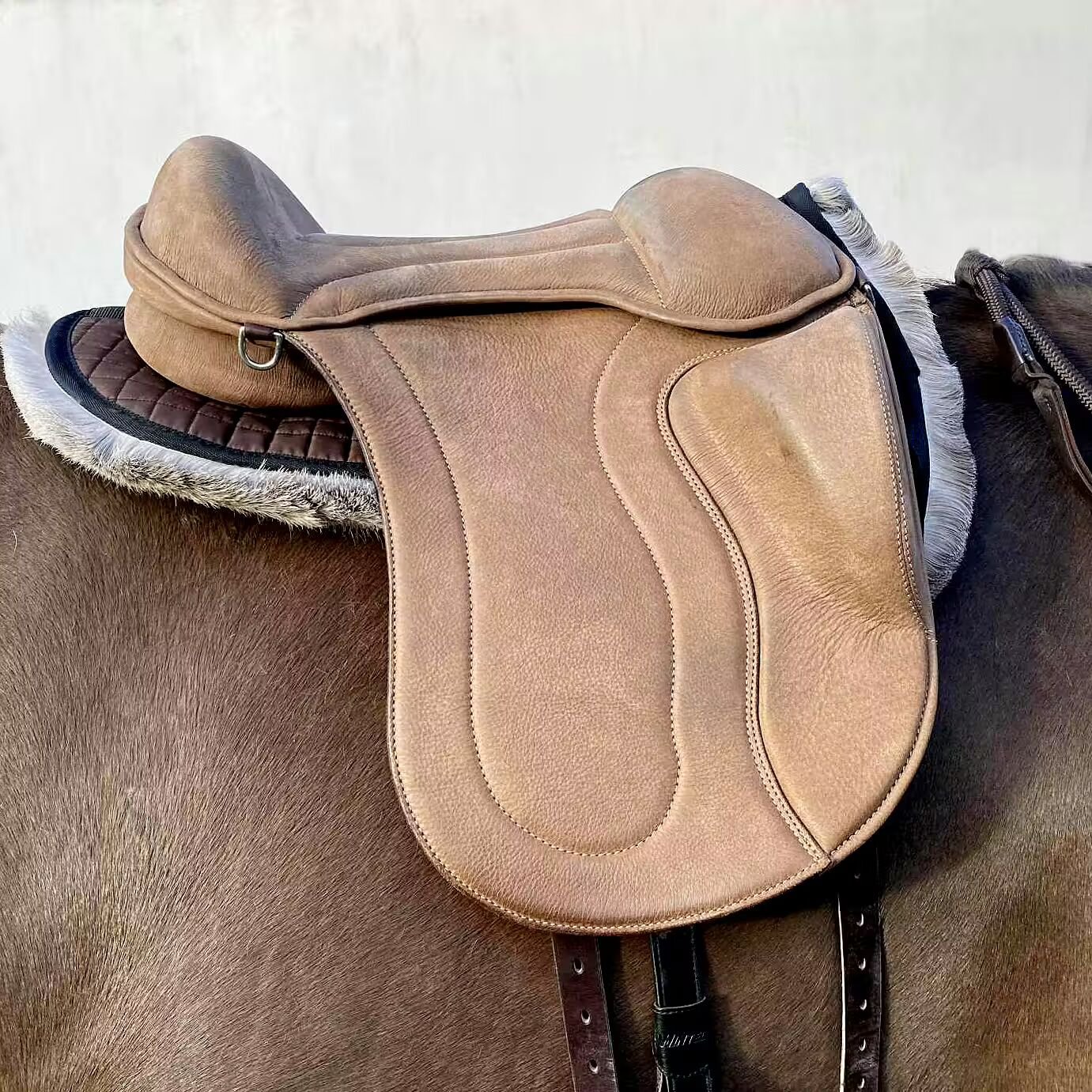
The Benefits of Reindeer Hide as a Saddle Pad
When horse owners think about saddle pads, most immediately consider materials such as wool, sheepskin, felt, foam, or synthetic fabrics. Yet in the northern regions of Scandinavia and other Arctic areas, another material has been used beneath saddles for generations: reindeer hide.
Long before modern saddle pad technology existed, the Sámi people of northern Norway, Sweden, Finland, and parts of Russia relied heavily on reindeer for transport, clothing, shelter, and daily life. Reindeer hides were commonly used as bedding, insulation, pack saddle padding, and riding surfaces due to their remarkable natural properties. Reindeer have been domesticated and utilised by Arctic peoples for thousands of years, with their hides valued for warmth, durability, and comfort.
Today, reindeer hides are increasingly attracting interest among horse owners seeking natural alternatives to conventional saddle pads. But what makes reindeer hide so unique?
The Unique Structure of Reindeer Hair
The exceptional qualities of reindeer hide begin with the hair itself.
Unlike the solid hair fibres found in many other species, reindeer hair is largely hollow. This adaptation allows reindeer to survive some of the harshest climates on earth, where temperatures can remain below freezing for extended periods. The hollow structure traps air within each fibre, creating a highly effective natural insulation system.
From an equestrian perspective, this hollow-fibre structure provides several potential advantages:
- Increased cushioning
- Enhanced shock absorption
- Reduced pressure concentration
- Excellent airflow between horse and saddle
- Improved thermal regulation
Rather than creating a dense, compact layer, the fibres compress and rebound while maintaining a degree of resilience that helps spread loading forces over a larger surface area.
Superior Pressure Distribution
One of the most frequently discussed benefits of reindeer hide is its ability to distribute pressure beneath the saddle.
Pressure concentration is one of the primary concerns in saddle fitting. Excessive focal pressure can contribute to muscle soreness, reduced performance, behavioural changes, and tissue damage over time. Research has consistently shown that uneven saddle pressure can negatively affect equine comfort and movement.
Interest in reindeer hide increased substantially following reports from saddle pressure testing conducted around 2010, where reindeer hide was found to perform exceptionally well when compared with a variety of commonly used saddle pad materials. These reports have been widely referenced within saddle fitting and endurance riding communities, with reindeer hide often described as one of the best-performing natural materials for pressure distribution.
While individual results will always depend on saddle fit, rider balance, and the horse’s conformation, the findings helped bring wider attention to a material that northern horsemen had already been using for generations.
The 2010 Study on Reindeer Hide Saddle Pads
One of the most frequently cited studies examining saddle pad materials was published in the Equine Veterinary Journal in 2010. Researchers investigated how different saddle pad materials influenced force and pressure distribution beneath a correctly fitting dressage saddle.
The study involved 16 sound horses ridden on a treadmill at both walk and sitting trot. Four saddle pad materials were tested: gel, leather, foam, and reindeer fur. Measurements were also taken without a saddle pad for comparison. Using pressure-mapping technology, researchers evaluated both the maximum overall force acting beneath the saddle and how effectively pressure was distributed across the horse’s back.
The results were notable. Of all the materials tested, only the reindeer fur pad produced a statistically significant reduction in maximum overall force. At walk, maximum force decreased from 1005 N to 796 N, while at trot it decreased from 1650 N to 1437 N. The reindeer fur pad was also the only material that significantly improved pressure distribution in both the longitudinal and transverse directions during trot. Neither the gel, foam, nor leather pads produced the same statistically significant improvements.
The researchers concluded that a well-chosen saddle pad can reduce loading on the horse’s back and improve the suitability of a correctly fitting saddle. Among the materials tested, reindeer fur demonstrated the greatest ability to reduce peak forces and distribute pressure more evenly beneath the saddle.
While no saddle pad can compensate for a poorly fitting saddle, these findings provide compelling evidence that reindeer hide may offer unique advantages for horses requiring additional comfort, pressure distribution, and back support beneath a correctly fitted saddle.
Natural Shock Absorption
Every stride creates movement between the horse, saddle, and rider.
A suitable saddle pad should not simply add thickness; it should help absorb and disperse forces without creating instability.
The hollow fibres within reindeer hide create thousands of tiny air pockets throughout the material. These pockets act as miniature shock absorbers, helping to dampen impact forces before they reach the horse’s back.
Unlike some synthetic foams that can compress permanently over time, quality reindeer hide tends to retain much of its natural loft when properly cared for.
Excellent Temperature Regulation
Many modern saddle pads focus on moisture-wicking properties, but temperature regulation is equally important.
One reason reindeer thrive in Arctic climates is their extraordinary ability to regulate heat. The hollow fibre structure traps insulating air while still allowing moisture and heat to move away from the body.
Under a saddle, this may offer several advantages:
- Reduced heat build-up
- Improved airflow
- Greater comfort during long rides
- Less moisture accumulation beneath the saddle
For endurance riders and horses working in demanding conditions, minimising excessive heat under the saddle can be particularly valuable.
Lightweight Yet Supportive
Many pressure-distributing materials are relatively heavy.
Reindeer hide offers an interesting balance between cushioning and weight. Because the fibres themselves are hollow, the hide provides substantial loft and cushioning without excessive bulk.
This allows riders to benefit from additional padding while maintaining a close-contact feel.
Adaptability to the Horse’s Back
Natural materials often conform more effectively to the horse’s shape than rigid synthetic alternatives.
With use, reindeer hide tends to settle and mould to the contours of the horse’s back while retaining its cushioning properties. This adaptability can help create a more consistent contact surface beneath the saddle.
Many riders describe reindeer hide as providing a “customised” feel over time as the fibres naturally adjust to the horse’s anatomy.
Durability and Longevity
A quality reindeer hide can provide many years of service when properly maintained.
Unlike some synthetic saddle pads that lose resilience through repeated compression, reindeer hide often maintains its structure remarkably well. The dense hide and resilient hair fibres contribute to its longevity.
As with any natural material, correct storage and care are important to maximise lifespan.
A Tradition Backed by Experience
Perhaps one of the strongest endorsements for reindeer hide is simply its long history of use.
For generations, people living in some of the world’s harshest climates have relied on reindeer hides for warmth, comfort, transport, and practical everyday use. Reindeer have supported northern cultures for thousands of years, providing clothing, bedding, shelter materials, and working equipment.
Long before pressure mapping technology existed, riders were already recognising the comfort and performance benefits of this remarkable natural material.
Final Thoughts
No saddle pad can compensate for a poorly fitting saddle. Correct saddle fit will always remain the foundation of equine comfort and performance.
However, when used beneath a well-fitted saddle, reindeer hide offers a unique combination of:
- Exceptional pressure distribution
- Natural shock absorption
- Outstanding thermal regulation
- Breathability
- Lightweight cushioning
- Long-term durability
These qualities help explain why reindeer hide has remained a trusted choice in northern Europe for generations and why it continues to attract interest from riders seeking natural, high-performance saddle padding solutions today.