
Blood test is common but is it always the best way?
When it comes to assessing your horse’s health, blood testing is often one of the first tools used. It is widely accessible, clinically valuable, and provides important information about what is happening within the body at a given moment.
But like any diagnostic tool, blood testing has its limitations. To truly understand your horse’s health; particularly in more chronic or complex cases, it is important to look beyond a single snapshot.
What blood testing does well
Blood tests are excellent for assessing acute and functional changes in the body. They can help identify:
- Inflammation and infection
- Liver and kidney function
- Electrolyte balance
- Hormonal patterns
- Circulating nutrient levels
Because blood reflects what is actively moving through the system, it gives us a real-time view of how the body is responding to its current environment. This makes it particularly useful in cases of illness, injury, or when monitoring ongoing conditions.
The limitation: the body protects the blood
One of the most important things to understand is that the body prioritises stability in the bloodstream.
Even when there are underlying imbalances, the body will often draw on stored nutrients (from tissues such as the liver, bones, and cells) to keep blood levels within a normal range. This is a survival mechanism—it allows the horse to continue functioning even when internal reserves are being depleted.
As a result, blood results can sometimes appear “normal” despite deeper imbalances being present.
This is why horses may still show signs such as poor performance, behavioural changes, sensitivity under saddle, or coat and hoof issues—even when blood work does not indicate a clear problem.
Looking deeper: where HTMA fits in
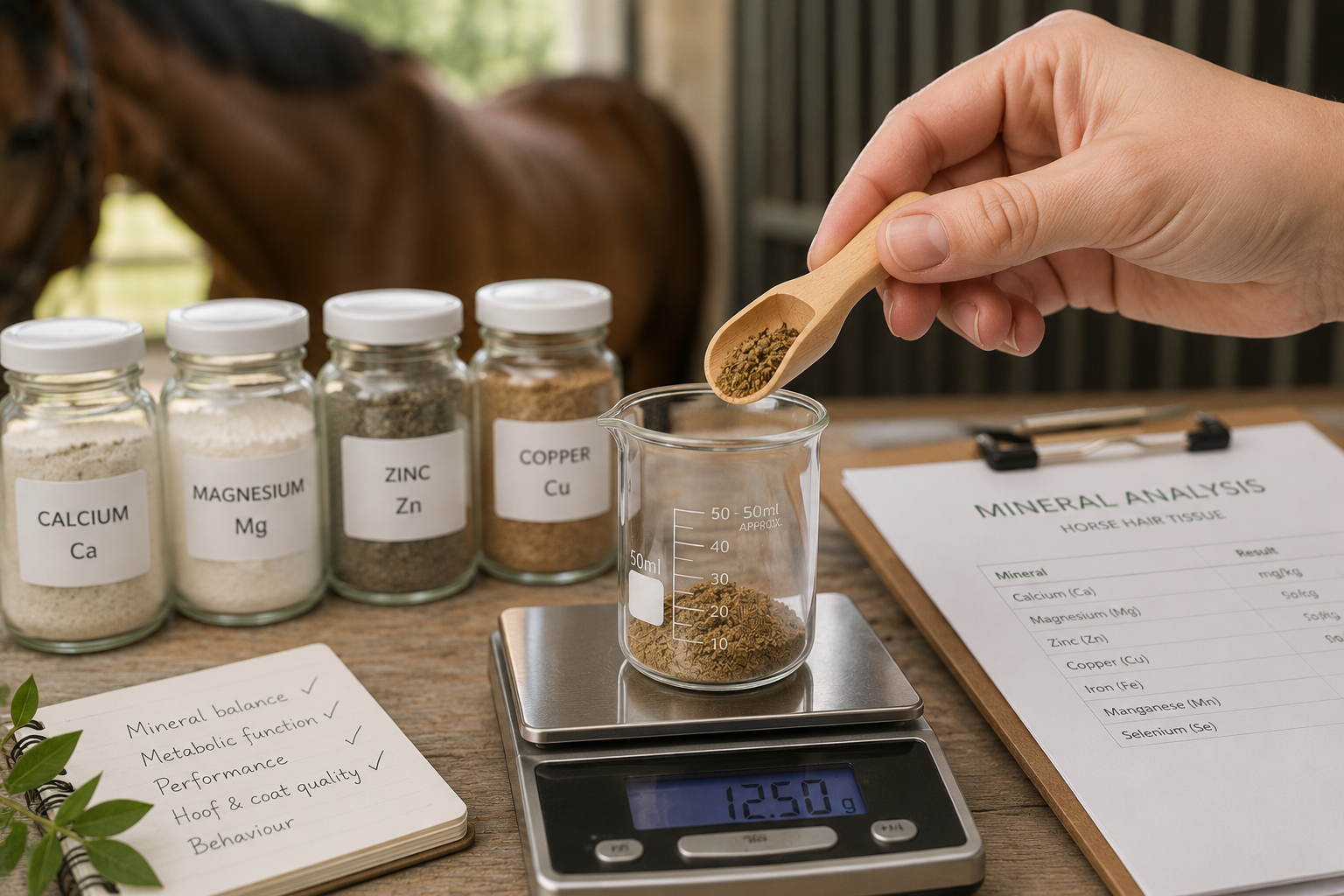
Hair Tissue Mineral Analysis (HTMA) offers a different perspective.
Rather than measuring what is circulating in the moment, HTMA reflects what has been deposited in tissues over time. This provides insight into longer-term mineral patterns, including:
- Mineral deficiencies and excesses
- Imbalances between key nutrients (such as calcium and phosphorus, or zinc and copper)
- Trends in metabolic function
- Potential accumulation of heavy metals
HTMA allows us to assess how the body is managing its resources over weeks to months—not just what is happening on the day of testing.
Blood vs HTMA: not competing, but complementary
It is not a question of which test is better—they simply provide different information.
Blood testing helps us understand:
- What is happening right now
- How the body is responding in the present moment
HTMA helps us understand:
- What has been happening over time
- How well the body is maintaining internal balance
- Whether deeper imbalances may be developing beneath the surface
When used together, these tools provide a far more complete picture of your horse’s health.
A more complete approach to equine health
At Pure Equine Balance, we take a holistic approach, recognising that true health is not just the absence of disease, but the presence of balance.
By combining functional blood interpretation with HTMA, we are able to look beyond surface-level findings and support the body at a deeper level. This allows for more targeted nutrition, more precise supplementation, and a clearer understanding of what your horse truly needs.
When to consider looking deeper
If your horse:
- Has “normal” blood results but ongoing symptoms
- Struggles with performance, behaviour, or recovery
- Has recurring or chronic health concerns
- Simply isn’t thriving as expected
…it may be time to look beyond the blood.
Final thoughts
Blood testing remains an essential and valuable tool. But it is only one piece of the puzzle.
By integrating HTMA, we can move from a reactive approach to a more proactive and preventative one, supporting long-term health, resilience, and performance from the inside out.
If you would like to explore a more in-depth understanding of your horse’s health, HTMA can provide the missing insight.